A Rainy Afternoon, Planned Around One Good Thing
Plan a rainy afternoon around one chosen activity, with a clear centre and open space before and after, so indoor time feels considered rather than crowded.
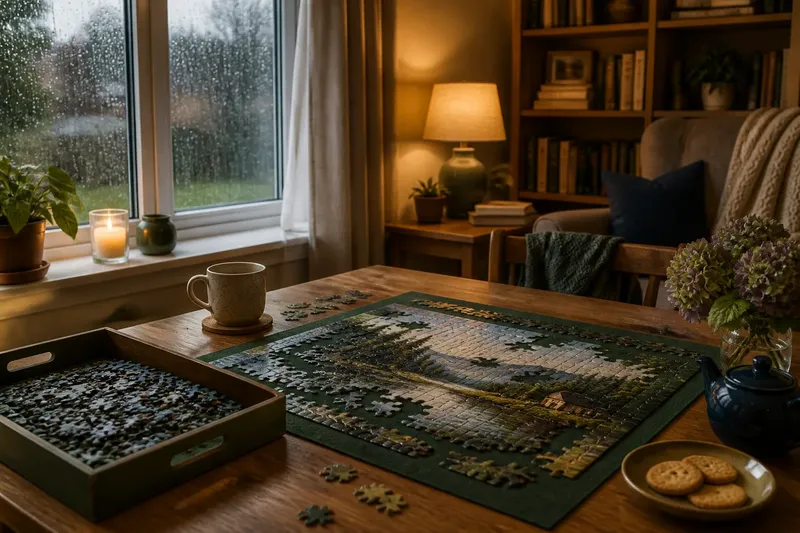
Rain taps the kitchen window as the kettle boils, and the afternoon stretches ahead. A rainy afternoon plan built around one activity can give the day a centre without turning every quiet hour indoors into something to organise.
The useful question is not only what sounds enjoyable, but what kind of shape suits the day. A film has a clear beginning and end; a jigsaw can sit ready on a table; a book can remain a possibility without a start time.
What makes one activity a useful centre?
An activity gives the afternoon a point of focus, while the hours around it remain unassigned. It might be baking a familiar loaf, sketching by the window, listening to an album or playing a board game. The point is not to make the activity important; it is to give the weather-bound stretch a recognisable shape.
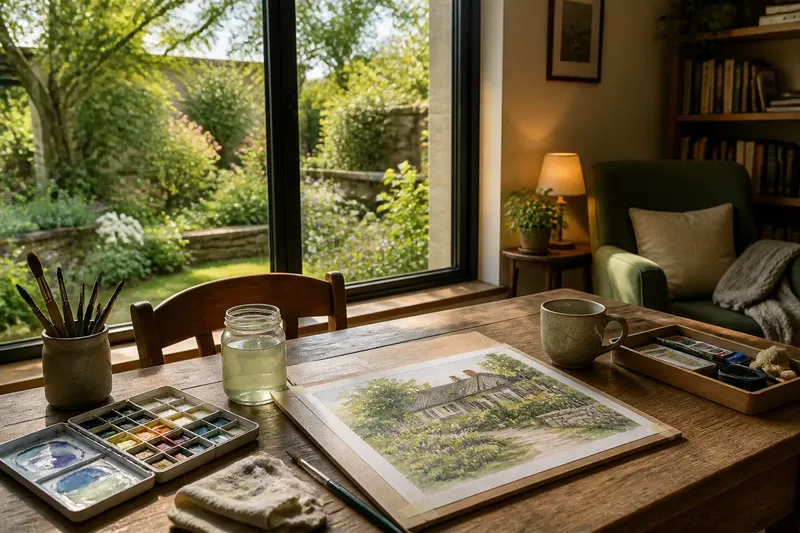
Think about the space and materials as part of the choice. A jigsaw needs a surface where it can stay undisturbed, while watercolours call for paper, a brush and a table that can take a little mess. A film asks less preparation but does depend on a screen and a comfortable place to sit.
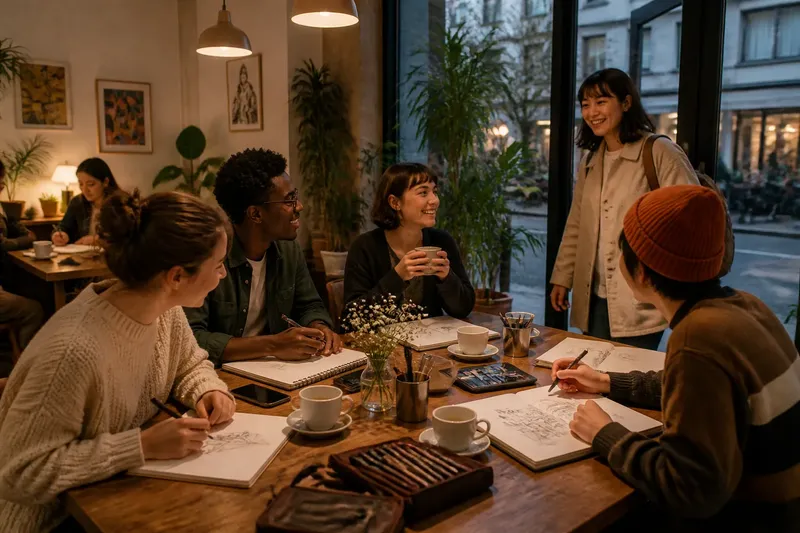
For several people, choose something with different ways to take part. Someone might play a turn, watch, or wander off and return. That flexibility is more useful than insisting that everybody enjoy the activity in precisely the same way.
Should the rainy afternoon plan have a set time?
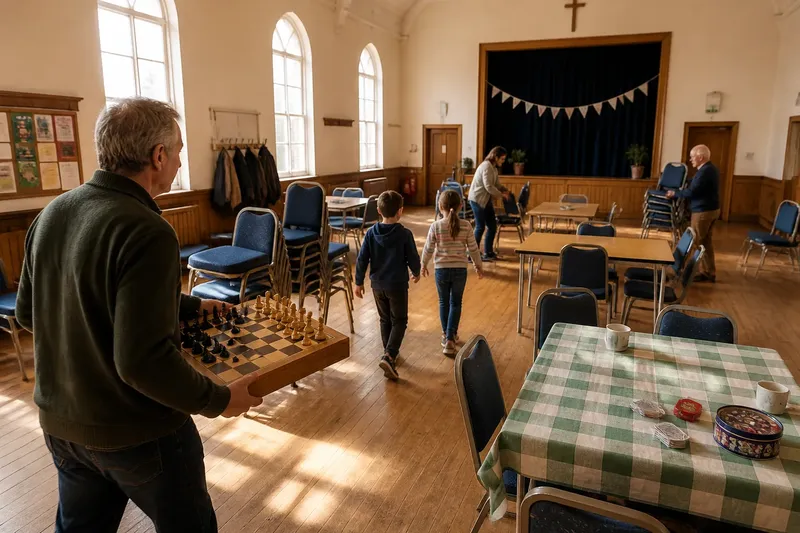
A fixed start suits an activity with a natural finish, or one that another person needs to join at a known time. You could put on a film after lunch or begin a bread-making session once the kitchen is clear. Keep the rest of the day open so the activity does not become one appointment in a chain.
The trade-off is that a set time can make a slow afternoon feel scheduled. Choose a broad point in the day rather than a precise timetable, and leave room to make tea, settle in and stop without hurrying to the next thing.
An invitation can keep a shared plan light: “I’m starting the film after lunch if you fancy joining.” It makes the activity clear without assigning anyone a role or implying that they must stay to the end.
When does a flexible window work better?
A flexible window suits activities that can pause and resume. Set a jigsaw on a table, leave a notebook beside an armchair, or gather the ingredients for a familiar recipe without choosing an exact start time. The activity is available, but it does not occupy the whole afternoon.
Gathering the materials can make the difference between an idea and an activity that is easy to begin. Put the jigsaw pieces in a tray, keep a bookmark in the book, or leave pencils together in a tin. These small arrangements also make it easier to clear the space when you have had enough.
This is a good fit for a household where people drift in and out. One person can add a few pieces to the puzzle while another reads nearby; neither has to call the moment a formal start.
How can a rainy afternoon plan fit different moods?
What works if I want a clear change of pace?
Choose a film or board game with a natural stopping point. If you want the afternoon to feel like an event, set a loose start time; if you would rather keep the day unstructured, leave the activity ready and begin when it suits you.
What should I choose if people may come and go?
Pick something that can be paused, such as a jigsaw or drawing, and keep its materials together in a tray or tin. If people want to join briefly, the activity is ready; if nobody does, the materials can be put away without rearranging the day.
What if I do not know how much energy I will have?
Leave one quiet option within reach, such as a book, knitting basket or album. If you feel like starting, begin; if you do not, let the object remain an invitation rather than a promise.
How do I choose for a mixed-age household?
Choose a shared activity with room for varied involvement, such as decorating biscuits or playing a simple card game. If someone wants to take part, offer a small role; if they would rather watch or step away, let that be part of the arrangement.
How much preparation is enough?
Set out only what the activity needs to begin. For drawing, that might mean paper, a pencil and an eraser; for a jigsaw, the pieces and a usable surface. If something essential is missing, choose a familiar alternative rather than letting a special shopping trip become the main event.
It is not worth preparing a backup for every change in mood or filling each hour with another option. Rain can stop, someone can feel tired, or the original idea can lose its appeal. One alternative is plenty if you genuinely want one.
Imagine you are at home on a wet afternoon with a half-finished jigsaw, a clear side table and a tray for loose pieces. After lunch, put the tray beside the puzzle and leave the afternoon unscheduled. If someone feels like joining, they can add a few pieces; if no one does, return the pieces to the tray and use the table as usual. The trade-off is that the puzzle may remain unfinished, but it has offered a ready-made shared activity without claiming the day.
How should you leave room around the activity?
Count the unclaimed time as part of the plan, not as a gap that needs filling. Before starting, leave room to change into dry clothes, make tea or clear a chair. Afterwards, allow time to tidy away, talk, or sit without deciding what comes next.
For a more definite centre, say you have been looking forward to making soup. Set out the recipe and ingredients, begin when the kitchen is ready, and leave the time after eating open. If cooking starts to feel like too much, put the ingredients away and choose something that asks less of you; the decision is to preserve a pleasant afternoon, not to complete a recipe at all costs.
A rainy afternoon plan works best when its structure matches the activity: a loose start for a film, an open window for a jigsaw, or no promised start for a book. Keep the materials visible enough to invite you, and give yourself permission to leave them untouched. A little open space is not a failure to plan; it is what lets the chosen activity remain leisure.